
Human Worth Within a Commercial World
Memoirs of a GeishaThis thread traces how the novel presents geisha life as an art shaped by economic dependence, while exposing the tension between professional value and personal dignity.
increasing Bearing strength in each event
 decreasing
Bearing strength in each eventdecreasingThe Okiya’s Accounts

The Okiya’s Accounts
A debt measured in a future
Chiyo learns that the okiya charges her for acquisition, meals, clothing, lessons, and medical care. Her everyday life is recorded as an accumulating liability she is expected to repay through future earnings.
Dependence disguised as investment
Training can create genuine skill, but the household controls the terms under which that skill is developed and sold. Chiyo’s prospects are therefore tied to decisions made by Mother and to the economic value the okiya expects her to produce.
A human life in a ledger
The debt system makes a child’s future appear calculable, as though work and success could guarantee repayment. The novel’s account exposes how economic arrangements can restrict choice while describing themselves as opportunity.
Art and Market Value
Art and Market Value
Skill as livelihood
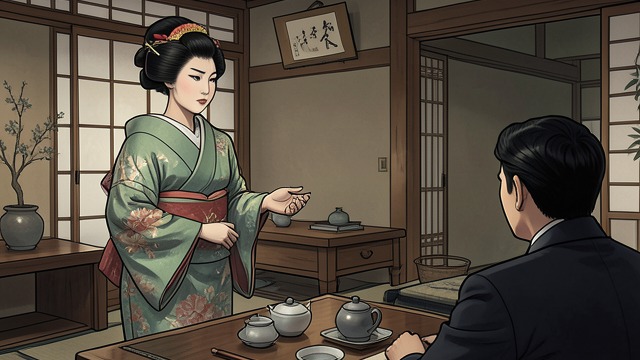
Mameha explains that dance, music, comportment, and social relationships shape a geisha’s standing. Artistic training is real labor, but it also functions within a commercial network of customers, teahouses, teachers, and patrons.
Reputation becomes currency
Sayuri’s success depends not only on what she can perform but on who introduces her, where she is seen, and whether influential people want her company. Her public image has economic consequences that extend beyond any single engagement.
Art under constraint
The novel neither treats geisha art as an illusion nor separates it from the market that sustains it. Its beauty and discipline coexist with financial dependence, making artistic achievement both a form of expression and a means of survival.
The Price of Mizuage

The Price of Mizuage
A person treated as a prize
The bidding over Sayuri’s mizuage turns her future into a contest among powerful men. Mameha tries to use competition to improve Sayuri’s financial prospects, while the teahouse’s negotiations raise the price attached to her body.
Money reshapes security
The record payment allows Mother to repay the okiya’s accumulated costs and adopt Sayuri as its daughter. The arrangement brings Sayuri increased status and protection from Hatsumomo, but her earnings become the okiya’s property.
Value without autonomy
The outcome reveals how economic security can arrive through a transaction that leaves Sayuri with limited control. A high price can change her position in Gion without resolving the larger question of who owns the fruits of her labor.
The Patron’s Protection
The Patron’s Protection
Support with unequal terms
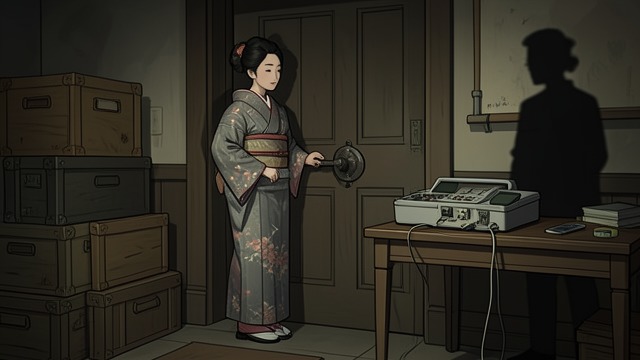
General Tottori’s arrangement gives Sayuri and the okiya access to money, supplies, medical care, and influence. Those benefits matter especially as wartime scarcity deepens and ordinary sources of support disappear.
Protection as dependence
The General’s position helps shield the household, but it also shows how safety can depend on a powerful patron’s standing. When he is detained, the okiya loses the protection that had distinguished it from other households.
The costs of security
Sayuri’s relationship with the General is not a simple story of rescue. It provides practical advantages while limiting her freedom and tying her livelihood to political power she cannot control.
A New Patron and an Old Profession

A New Patron and an Old Profession
Security through a private arrangement
The Chairman’s support allows Sayuri to leave active work in Gion and later establish a teahouse in New York City. His resources create a degree of security unavailable to her in her earlier years.
Freedom with boundaries
Leaving Gion frees Sayuri from its daily obligations, but the Chairman is married and does not offer her the status of a wife. Her new life is shaped by affection and opportunity, yet remains structured by unequal social and financial power.
What the arrangement changes
Sayuri’s story does not treat patronage as either pure rescue or simple exploitation. It can provide real care and a chosen life, while still revealing the constraints that make a woman’s independence dependent on another person’s wealth.
During Chiyo’s first months as a maid in Gion
After Mameha takes Sayuri as her younger sister
In the period leading to Sayuri’s mizuage
When Sayuri becomes the General’s mistress in 1938
After the Chairman becomes Sayuri’s danna
